
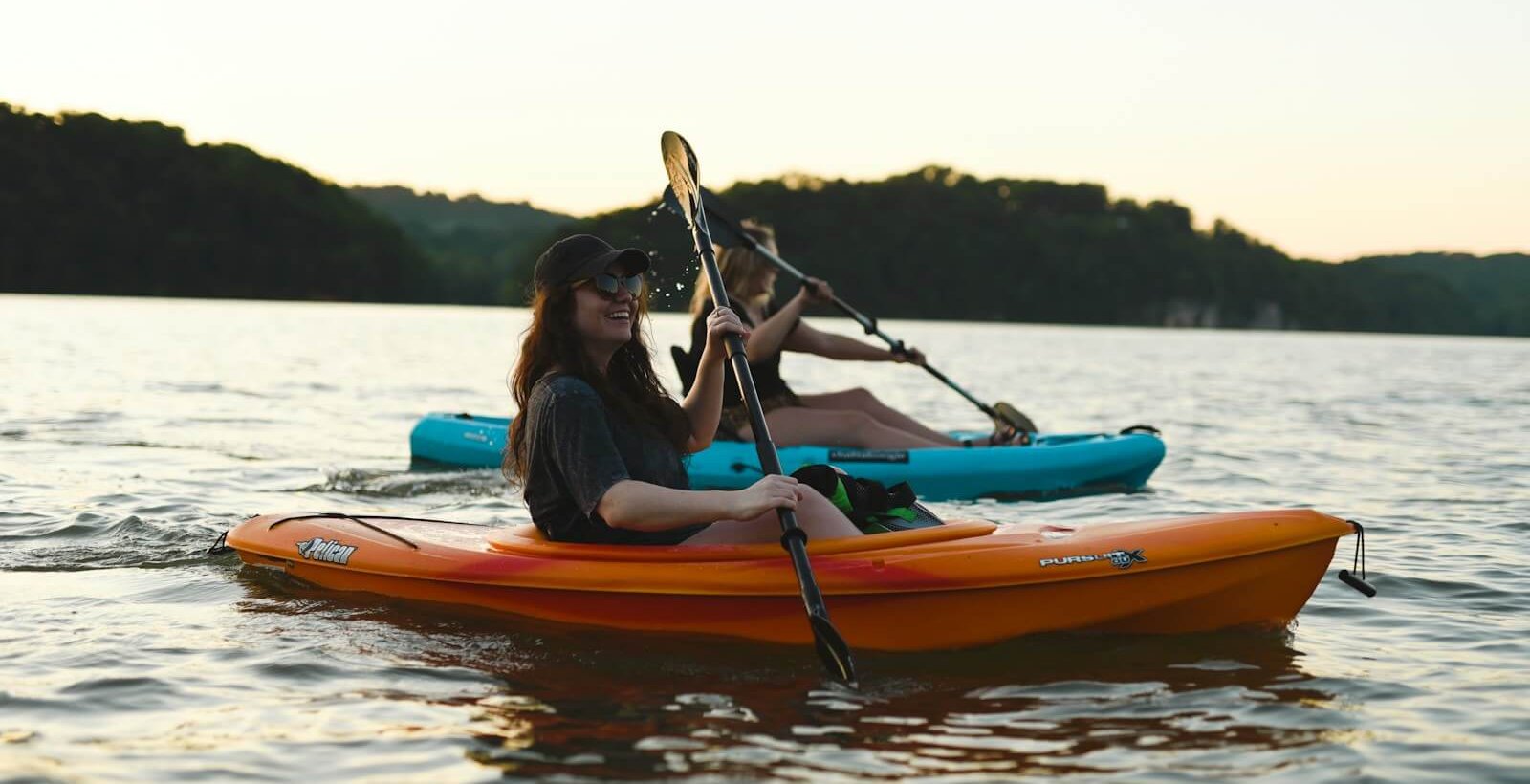
 For a lot of people in Victoria, getting out on the water is one of the best parts of living here. Kayaking the Inner Harbour, paddleboarding the Gorge Waterway, dragon boating, rowing at Elk Lake: paddle sports are a great way to stay active and get outside. But all that paddling and pulling can challenge the muscles, tendons, and joints involved in each stroke. Pain, stiffness, or reduced mobility may indicate irritation, overuse, or another factor worth having assessed.
Why Paddle Sports May Lead to Shoulder Pain
Kayaking, paddleboarding, dragon boating, and rowing all rely on repetitive upper-body movement. Great for strength and endurance, but repeating the same motion hundreds or thousands of times may gradually strain the tissues involved in upper-body movement. The shoulder is built for a huge range of motion, but that mobility depends on the muscles, tendons, joints, and surrounding areas, including the neck and upper back, all moving in coordination. Some common conditions paddlers may experience include:
- Rotator Cuff Irritation. The rotator cuff is a group of muscles and tendons that stabilize the joint and control arm movement. Repetitive paddling can add extra stress here, particularly when technique, posture, fatigue, or muscle imbalance contributes to added strain.
- Shoulder Impingement. Impingement generally refers to irritation of tissues around the joint during certain arm movements. Paddlers often notice it reaching overhead, lifting the arm, or partway through repeated strokes.
- Frozen Shoulder. This involves progressively increasing stiffness and reduced mobility in the joint. It can develop for several reasons, but if you notice your range of motion shrinking, an assessment can help determine what may be contributing and whether referral or further evaluation is appropriate.
How Chiropractic May Help Paddle-Related Shoulder Pain
At Aria Health and Wellness Clinic, our approach starts with understanding how your upper body, spine, posture, and movement patterns connect. Your chiropractor will assess what’s likely contributing to your shoulder discomfort and whether chiropractic care fits your situation. From there, care might include chiropractic adjustments when appropriate, myofascial release, mobility exercises, and guidance to support healthier movement. Registered Massage Therapy and acupuncture, also offered at the clinic, may complement chiropractic care as well. Dr. Greg Marlin takes a practical approach to care, focusing on helping patients understand their bodies and improve their movement patterns.
The goal is not just to focus on where something hurts. We want to understand how the body is moving as a whole so we can identify factors that may be contributing to the problem.” Dr. Greg Marlin
Tips for More Comfortable Paddling
A few practical habits may reduce unnecessary strain and encourage more balanced upper-body movement during paddle sports:
- Warm up the shoulders, upper back, and neck before you get on the water
- Pay attention to paddling technique and avoid relying only on your arms
- Take breaks during longer sessions
- Include strength and mobility exercises outside of your sport
- Address discomfort early rather than pushing through worsening symptoms
Recreational paddler, competitive racer, or just someone who likes exploring the waterways around Victoria: paying attention to mobility, technique, and emerging discomfort can help you make informed decisions about your time on the water.
Keep Enjoying Your Time on the Water
If shoulder pain is cutting your time on the water short, contact Aria Health and Wellness Clinic to schedule an assessment and learn whether chiropractic care may be appropriate for your movement concerns.
CONTACT US