
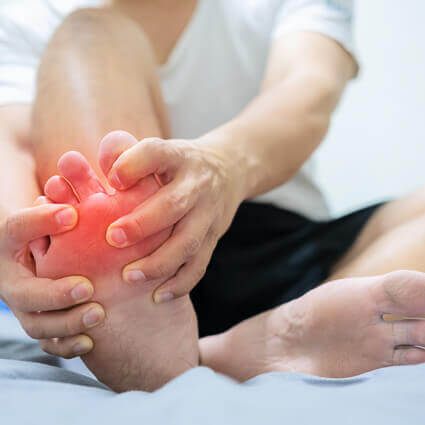
 When your back hurts, the last thing most people think to examine is their feet. But the connection between the two is more direct than you might expect, and it’s something we explore regularly with patients at Aria Health and Wellness Clinic.
Your feet are the base for everything. Every step you take sends forces upward through the ankles, knees, hips, and spine. When something is off in that foundation, the rest of the structure tends to compensate.
Over time, those compensations add up.
How Foot Mechanics Influence Back Health
Feet that pronate excessively, have high arches, or distribute weight unevenly can gradually alter how load travels through the lower body. The body is remarkably good at adapting, but that adaptability has a cost.
Muscles and joints in the hips and lower back often pick up the slack. Common contributing patterns include flat feet or fallen arches, excessive inward rolling (overpronation), high arches, uneven weight distribution, poor footwear, previous ankle injuries, and plantar fasciitis. When any of these persist without being addressed, tension in the knees, hips, and lumbar spine tends to follow.
The Hidden Role of Plantar Fasciitis
Plantar fasciitis is one of the most common foot complaints we see, and it’s a useful example of how foot pain creates downstream effects. The sharp heel pain it causes often prompts people to shift the way they walk, almost unconsciously.
Those movement shifts change how force travels through the legs and spine. Patients sometimes arrive with knee or low back irritation that turns out to be, at least in part, a compensation pattern rooted in how they’ve been protecting a sore heel.
“When we identify factors that may be contributing to movement limitations, patients often notice improvements beyond the area where they initially felt discomfort,” emphasizes Victoria chiropractor Dr. Greg Marlin, DC.
Signs Your Feet May Be Part of the Picture
A gait and foot mechanics assessment is worth considering if you’re noticing low back pain that worsens with prolonged standing or walking, frequent foot fatigue or aching arches, heel pain, knee or hip discomfort alongside your back pain, uneven wear on your shoes, or reduced balance and stability.
None of these on their own confirm a connection, but together they often paint a clear picture.
Where Custom Orthotics Come In
Custom orthotics are designed around how your feet actually function, unlike a generic insole shaped around average foot mechanics. By improving arch support and redistributing pressure, they can reduce strain at the feet and, importantly, at the knees, hips, and lower back as well.
They tend to work best as part of a broader care approach that includes chiropractic care and targeted rehabilitation. Our team integrates orthotics into a full movement-focused plan where indicated.
A Starting Point for Persistent Back Pain
If back pain has been limiting your daily activities and previous approaches haven’t fully resolved it, it’s worth exploring whether your feet and movement patterns are part of the story. The team at Aria Health and Wellness Clinic offers comprehensive assessments that look at the whole picture, not just the painful area.
For new patients, this first visit is an opportunity to discuss your concerns, review your movement patterns, and determine which care options may be appropriate for your needs.